I am a computational biophysicist at Penn State University, currently on the job market for faculty positions and for research scientist roles in academia, industry, and research institutes.
What I have worked on
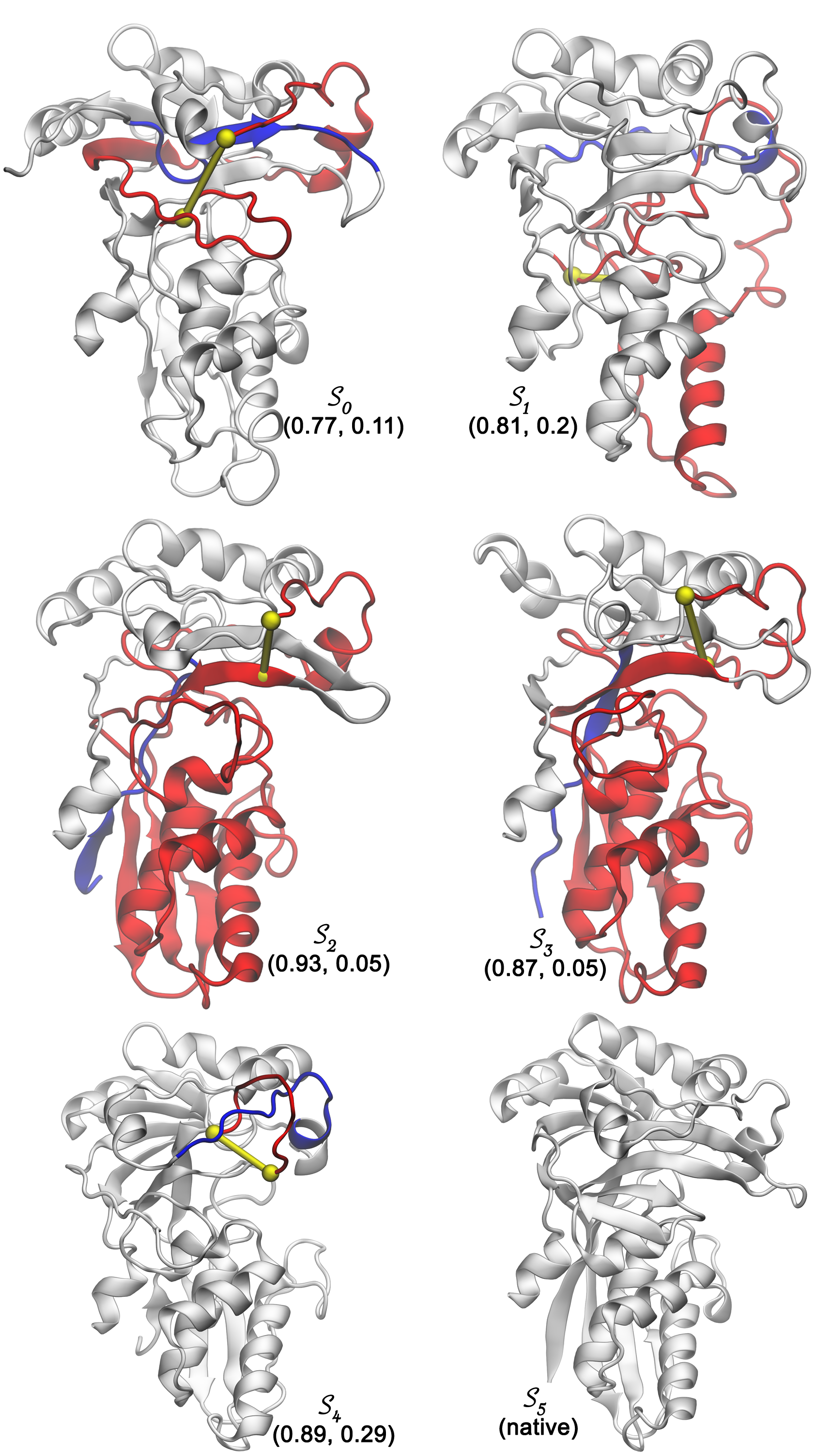
For the past several years I have pursued one question: how proteins fail to fold correctly, and what those failures cost the cell. My focus is entanglement — conformations in which the backbone forms a loop that another segment of the same chain threads through, closing like a lasso. Such states are easy to miss experimentally and hard to sample in simulation, which has made them far easier to overlook than to rule out.
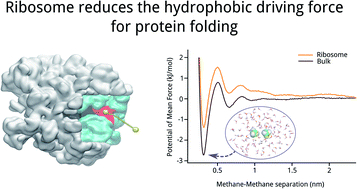
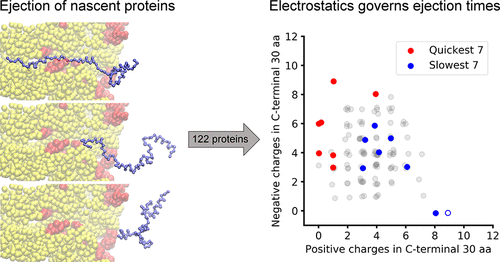
I started at the ribosome, showing that the driving force for cotranslational folding is weaker in the exit-tunnel vestibule because water there is more ordered, and contributing to work on how electrostatic interactions govern the ejection of a finished nascent chain. That line of work led me to entanglement. Using all-atom and coarse-grained simulations alongside statistical mechanics and structural analysis, my colleagues and I have shown that non-native entanglements form both during and after synthesis, that they persist long after folding is nominally complete, and that chaperones do not reliably resolve them. Following the consequences outward, we find that entanglements are common in experimentally derived intrinsically disordered ensembles, that they accumulate in the aging yeast proteome, and that they are enriched among proteins linked to human disease.
What I want to tackle next
How do intrinsically disordered regions shape the folding of the ordered domains they are attached to?
Nature is economical. Disorder is not free — an unstructured chain is exposed to aggregation and to degradation — and yet a large share of the eukaryotic proteome is disordered, and these regions are retained under selection. They are there for a reason. The field has looked for that reason mostly in binding and in condensate formation, while folding itself has been studied almost entirely in globular proteins. The two literatures have grown up apart, and the space between them is where I want to work.
A disordered region attached to a folding domain is not a bystander: it carries charge, it occupies volume, and its position in the sequence sets when it emerges from the ribosome relative to the domain it flanks. I want to know how such regions bias folding pathways — and, specifically, whether flanking disorder promotes or suppresses the entangled misfolded states described above.